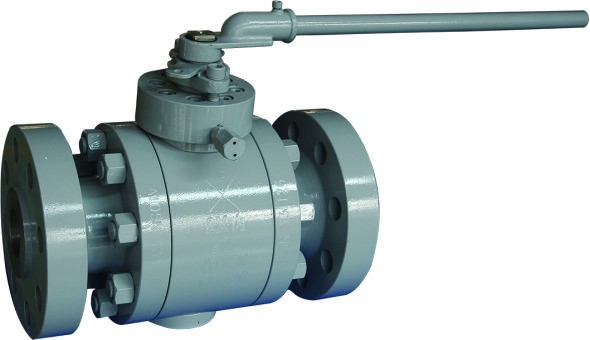
A check valve allows fluid to flow in only one direction and prevents reverse flow. These valves operate automatically. When fluid flows in the correct direction, the valve opens. When fluid flows in the opposite direction, the pressure and the weight of the valve disc force it against the seat, stopping the flow.
Swing check valves have a hinge mechanism and a disc that rests freely against an inclined seat. To ensure proper seating, the disc is designed to swing fully open and make full contact with the seat. The valve can be entirely metal or have a leather, rubber, or synthetic covering, depending on performance requirements. When fully open, swing check valves offer minimal fluid resistance, resulting in a low pressure drop.
- Product Standards:API 6D, API 594, BS 1868, ASME B16.34
- Nominal Pressure:150LB-2500LB
- Nominal Diameter:2″-50″
- Main Material: A216 WCB, WCC; A217 WC6, WC9, C5, C12, C12A, CA15; A351 CF8, CF8M, CF3, CF3M; A352 LCB, LCC
- Operating Temperature:-196℃ to 593℃
- Applicable Media: Water, steam, oil, nitric acid, acetic acid, strong oxidizing media, urea, and more
- Connection Methods:Flange, butt-weld
- Inspection Standards:API 598, ISO 5208
Besides general swing check valves, dual plate check valve and piston check valve, we also can make cryogenic check valve, forged steel check valve, ball type check valve, tilting check valve etc. We can also make the different material according to user’s requirement, likely Monel, Hastelloy C, Inconel, Alloy 20 and so on.